
A Homeowner's Guide to Popular Siding Patterns
The right pattern does more than look good. Here's how to choose one that works for your home.
When most homeowners think about replacing their siding, the first questions tend to be about color and material. But there's another decision that shapes your home's entire exterior personality; one that often doesn't get enough attention: the pattern.
The way your siding is arranged, angled, and layered affects everything from curb appeal and architectural character to how well water sheds off your walls. Whether you're drawn to classic New England clapboard or something with a more modern edge, understanding your options makes all the difference. Here's a breakdown of the most popular siding patterns and how to figure out which one belongs on your home.
Why Siding Pattern Matters More Than You Think
Before diving into styles, it's worth understanding what a siding pattern actually does beyond its aesthetic appeal. The right pattern can:
Reinforce your home's architectural identity, whether that's a colonial, Cape Cod, farmhouse, or contemporary build
Manage water runoff effectively, reducing moisture-related issues and extending the life of your siding
Add depth and texture that changes the way your home reads from the street, making it feel larger, more refined, or more grounded depending on what you choose
Think of a siding pattern as the framework on which everything else hangs. Get it right, and your color, trim, and window choices all come together naturally. Get it wrong, and your exterior may feel off-balance or incomplete.
Horizontal Siding Patterns
Horizontal siding is the most common choice across Connecticut neighborhoods, and it's earned that status. These styles handle New England weather well, shed water reliably, and offer a range of looks from subtle to striking.
Traditional Lap (Clapboard)
This is the quintessential New England siding profile. Long horizontal boards overlap the one below, creating a shadow line that adds depth while directing water away from the wall. It's versatile enough to work on traditional colonials and transitional homes alike, and it pairs naturally with classic trim profiles. Fiber-cement and engineered-wood versions of lap siding bring modern durability to a timeless look.
Dutch Lap
If you want more visual drama than standard lap provides, Dutch lap is worth a close look. It builds on the traditional profile with a beveled notch along the top edge of each board, creating deeper, more angular shadow lines. The result is a stronger, more defined appearance that suits Colonial Revival, farmhouse, and early 20th-century styles particularly well.
Beaded Siding
Beaded siding is lap siding with a little extra personality. A subtle, rounded bead runs along the bottom edge of each board, producing extra shadow and a more refined, crafted feel. It's a popular choice for historic homes and coastal-style properties, and it reads as elegant without being showy.
Vertical Siding Patterns
Vertical siding has a different effect on a home's exterior. It draws the eye upward, making structures feel taller and more commanding. It's also a great way to mix things up on a primarily horizontal exterior, adding contrast and visual interest.
Board & Batten
Board and batten is having a major moment right now, and for good reason. Wide vertical boards are placed side by side, with narrow strips (battens) covering the seams. The result is a bold, rhythmic pattern with strong shadow lines that works beautifully on modern farmhouse, rustic, and contemporary homes. It also translates well as an accent; think a gabled end wall or a lower-story contrast panel.
Panel Siding
For a cleaner, more streamlined look, vertical panel siding offers smooth surfaces with minimal seams. It complements minimalist, mid-century, and contemporary architecture well, and works especially well as an accent feature to highlight architectural details. Fiber cement and engineered wood panels now offer this look with the texture of real wood, without the maintenance headaches.
Shake & Specialty Siding Patterns
If you want your home's exterior to have real personality, shake siding delivers it. These profiles (which include round (half-moon), square, and mitered corner shapes) are typically used on gables, window bays, dormers, or upper stories rather than as the primary siding material.
The result is a hand-crafted, artisanal look that adds charm and detail where a flat surface would feel too plain. Shake patterns work especially well as a complement to lap or board-and-batten siding, helping define different zones of the exterior. Modern versions in fiber cement and composite materials give you that classic look with significantly less upkeep than traditional wood shakes.
How to Choose the Right Pattern for Your Home
With so many options, where do you start? Here are a few questions worth asking:
What's your home's architectural style?
Traditional colonials and Cape Cods tend to look best with horizontal siding, such as lap or beaded siding. Farmhouses and contemporary builds are great candidates for board and batten. Shake accents work on almost any style as a complementary detail.
How much texture do you want?
Some patterns are quiet and uniform. Others are bold and layered. Think about how your home sits on the street and whether you want it to stand out or blend gracefully into the neighborhood.
What's your maintenance tolerance?
This varies more by material than pattern, but it's worth factoring in. Some profiles, particularly those with more detail, may require more attention to ensure seals and edges stay tight over time.
How does it work with your other exterior elements?
Windows, doors, trim, and roofline all factor into how a siding pattern reads. A pattern that coordinates well with your existing architectural details will always feel more intentional than one chosen in isolation.
Many homeowners find it helpful to see renderings of different patterns on their actual home before making a final decision. This is something worth asking about when you start the conversation with your contractor.
Ready to Narrow It Down?
Choosing a siding pattern doesn't have to be overwhelming. Start with your home's architecture, layer in your personal style, and let the material options follow from there.
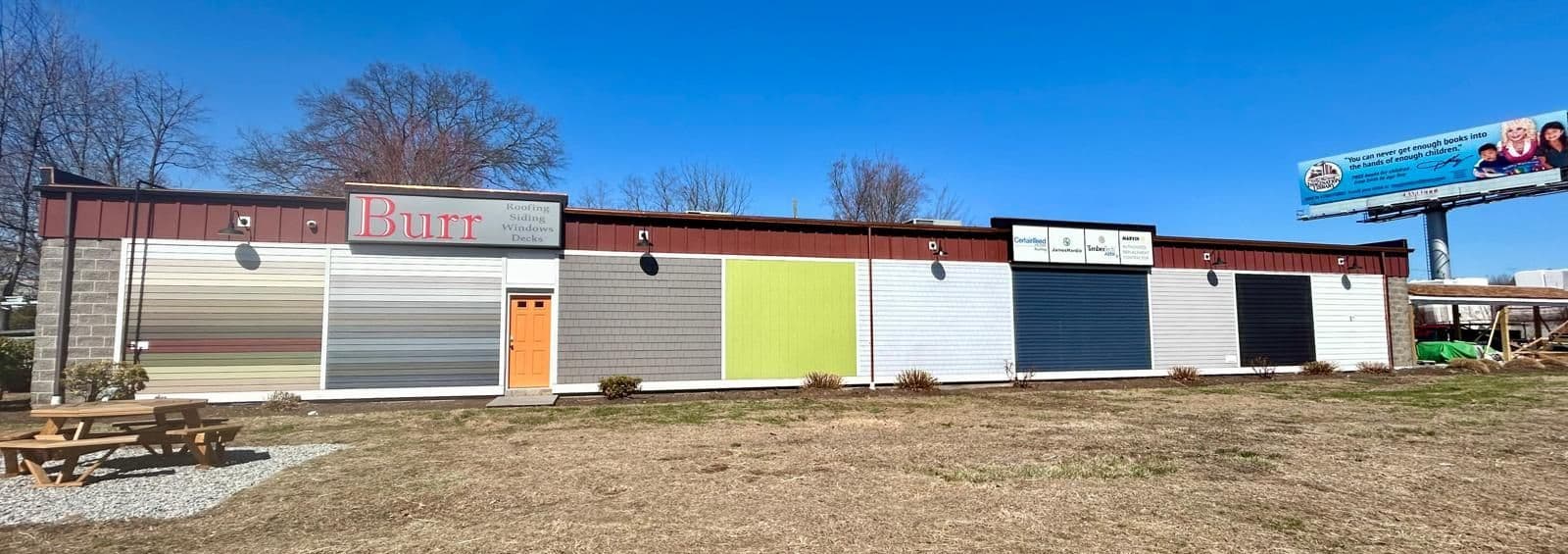
If you're in Connecticut and want expert guidance on which siding pattern is right for your home, Burr Custom Exteriors is the name to know. We’ve been helping local homeowners make exactly this decision for over 55 years. As a James Hardie Service Excellence Award recipient and authorized installer of James Hardie and CertainTeed products, our team can walk you through options, show you past projects, and even help you visualize the transformation, all from our Stratford design center.
Schedule a free consultation with us to get started.
Recent Posts
Today, let’s discover the superior benefits of composite decking compared to traditional wood decking...
Expert Skylight Installation and Remodeling Services Nearby
Mon-Fri 8 AM - 5PM
Sat-Sun By Appt. Only