
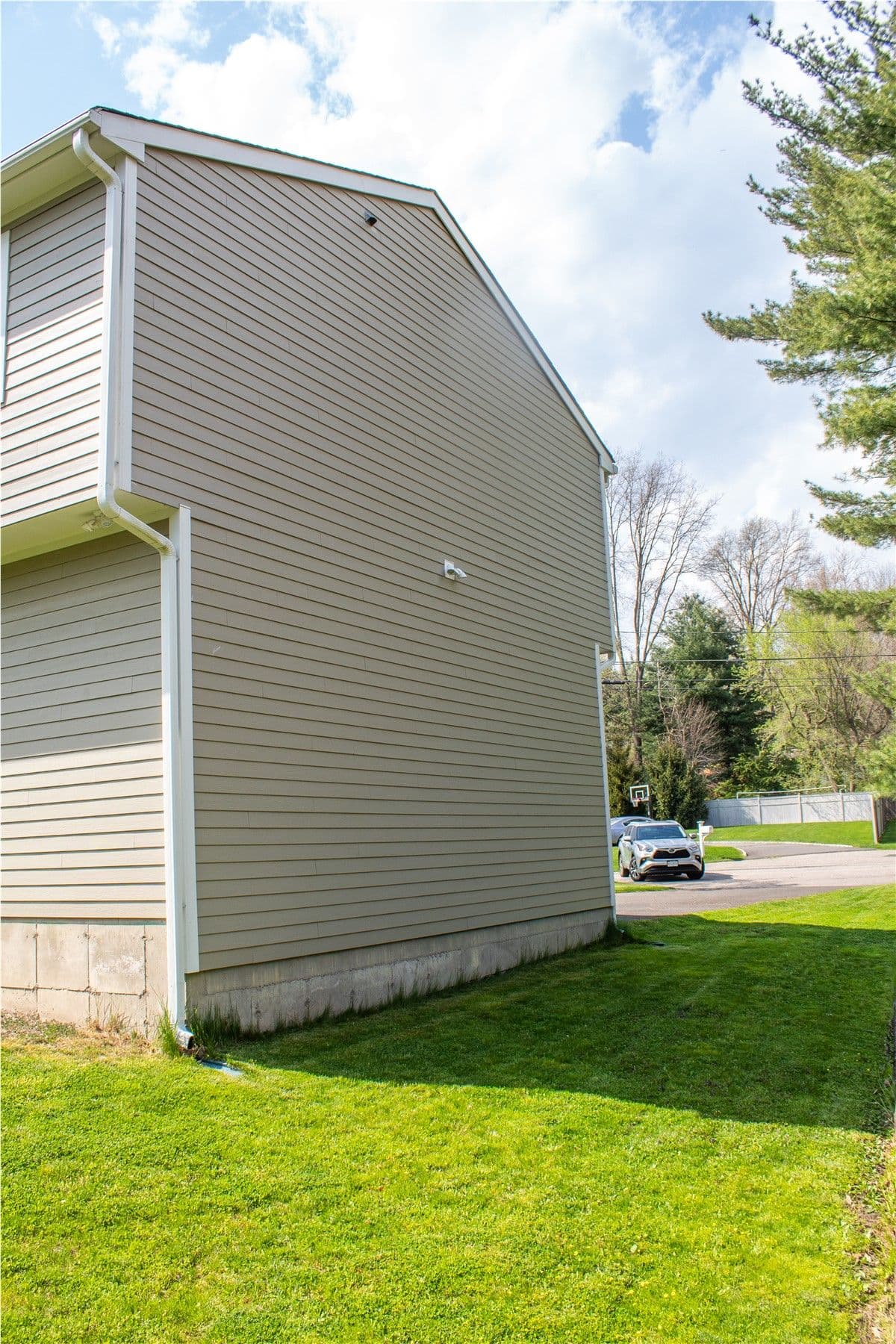
A Guide to James Hardie Mounting Blocks
If you've never heard the term "mounting block" before, you're not alone. Most homeowners only learn about them when an electrician, sider, or inspector mentions one during a project. In simple terms, a mounting block is a flat piece of material installed behind an outdoor fixture, like a light, an outlet, or a hose bibb, so that fixture has something solid and level to attach to.
Think about your James Hardie siding for a second. It's designed to shed water and protect the wall behind it, course by course, almost like shingles on a roof. Every time you cut a hole in that siding for a light or an outlet, you're creating a break in that protection. A mounting block fills that gap, giving the fixture a home while keeping water from finding its way into your wall. It's a small detail, but it's one Burr Custom Exteriors never treats as an afterthought.
Protecting the Wall Behind Your Fixture
Once you understand what a mounting block is, it's easier to see why skipping one causes problems. Without one, an outdoor light or outlet ends up resting directly on the siding panel, which was never designed to bear that kind of weight or hold a fixture in place on its own.
A block takes care of several things at once:
It keeps your fixture level and secure, instead of tilted or loose against the siding.
It gives moisture a path to drain away instead of pooling behind the fixture.
It reduces how much caulk is needed, since a well-fitted block does most of the work.
It protects the water-resistive barrier underneath your siding.
That barrier is worth pausing on for a second. Your siding is the first line of defense against rain and snow, but it's not the only one. Behind it sits a barrier that catches anything that slips past the surface and channels it down and away from your home.
If a mounting block is installed poorly, or if that barrier gets cut and never properly patched, water can end up somewhere it was never supposed to go. A mounting block isn't just cosmetic. It's doing real work to keep your wall dry.
Recent Posts
Today, let’s discover the superior benefits of composite decking compared to traditional wood decking...
The Importance of Fit, Flashing, and Compatibility
Here's something a lot of homeowners don't realize: not every block that physically fits an opening is actually the right choice. Material, thickness, and flashing design all affect how long a block holds up against Connecticut's weather, and a block that seems fine at first glance can still cause issues.
A block that pairs well with James Hardie siding needs to sit flat against the siding's profile and match the thickness of the surrounding panels, so there's no rocking or gapping at the edges. It also needs enough depth and clearance for whatever fixture is attaching to it, along with a solid connection to the framing or electrical box behind the wall.
Just as important, the block has to allow the barrier and flashing underneath to stay layered, using fasteners and materials made for outdoor fiber cement use. Any cut edges should be finished the way the manufacturer recommends, since a rough, unsealed edge is an entry point for moisture.
Mounting Block Materials at a Glance
Features | Fiber Cement | Vinyl | Composite |
Durability | Built tough to match your siding | Weakens with age, gets brittle | Solid, but quality varies |
Seasonal Movement | Moves in sync with your siding | Shifts more in temperature swings | Falls somewhere in between |
Weather Resistance | Stands up to freeze-thaw cycles | Cracks under extreme cold | Reliable, but check the product |
Appearance | Disappears into your siding | Can look out of place | Close match, worth a sample |
Maintenance | Quick checks on paint and sealant | Watch for fading and cracking | Occasional seam checks |
Supporting Lights, Outlets, Vents, and Plumbing
Different fixtures call for different mounting blocks, so the type you need depends entirely on what you're installing. Here's what to know before you settle on one:
Light Blocks
If you're adding or replacing an outdoor light, a light block gives the fixture a flat surface to mount on while housing the electrical box at the correct depth behind it. A properly placed light block also makes it much easier to swap fixtures later, since your electrician has a stable surface to work with rather than overlapping siding courses.
Receptacle and Outlet Blocks
Outdoor outlets need their weather-resistant covers to sit flush against the wall so they close and keep rain out. A mounting block gives that cover a flat surface to seal against, and the depth has to line up correctly with both the block and the box behind it. Any electrical work should always go through a licensed electrician following local code.
Hose Bibb and Plumbing Blocks
A hose bibb needs room for the pipe, fastening hardware, and the fixture body itself, and a block sized specifically for that purpose holds up far better than running the pipe straight through unsupported siding. It's also worth keeping the fixture accessible for future repairs, so a plumber can service it later without needing to cut into the panels around it.
Dryer Vent and Exhaust Blocks
Dryer vents and bathroom exhaust fans usually need a larger block to support the exterior flange while the duct passes through the wall. Flashing does most of the work here, guiding water around the opening instead of relying on caulk. These installations often need to account for clearance requirements and local mechanical codes.
Custom Blocks
Cameras, doorbells, and oversized or unusual fixtures often call for a block built specifically for that piece of equipment. These get fabricated to match your siding and trim while leaving enough room for the fixture's base, fasteners, and wiring. Reviewing the fixture's specs ahead of time helps us build something that fits correctly on the first try.
What to Expect From a Retrofit
Maybe your project isn't new construction at all. Maybe you just want to add a security camera, move a hose bibb, or fix a light that was mounted straight onto the siding without a block behind it. The good news is that we can usually retrofit a mounting block without removing your entire wall. That said, it's rarely as simple as placing a new block over the old opening.
We often need to pull back some of the surrounding siding so the new block can properly connect to the flashing and barrier underneath. A retrofit isn't a shortcut. It's just a smaller-scale version of the same careful process we use on new installations.
Why Choose Burr Custom Exteriors?
Burr Custom Exteriors has been a family-run business in Fairfield County since 1969, and we're now in our second generation of working on homes across Stratford. That history means we've watched Connecticut weather test siding details for decades, not just a season or two.
Our James Hardie Excellence Award reflects the care we put into details like this one, and mounting blocks get the same attention as everything else on your project. We plan for them early, flash them the right way, and stand behind the results once the job is complete. When someone trusts us with an opening in their exterior wall, that consistency earns their confidence.
Take a look through our gallery to see how these details show up on completed projects, or read what homeowners have to say about working with us on our customer reviews page.
Frequently Asked Questions
Does every outdoor fixture need a mounting block?
Most do. Lights, outlets, hose bibbs, cameras, and many vents all need a dedicated mounting surface, though some vent products come with their own built-in flange.
Can a mounting block actually cause a leak?
It can, if it's poorly flashed, fastened, or sized, or if the barrier behind it wasn't reconnected correctly. Installed to the manufacturer’s specifications, the block directs water around the opening instead of into it.
What should I watch for over time?
Keep an eye out for cracked or missing sealant, loose fixture covers, rusting fasteners, gaps around the block, or water stains nearby. Catching these early saves you from bigger repairs later, and a few minutes of checking now can save you a lot of hassle down the road.
Does Burr Custom Exteriors install mounting blocks outside of Stratford?
Yes! We work with homeowners throughout Fairfield County and the surrounding towns. Visit our service areas page to see the entire list of communities we cover.
Build Mounting Blocks Into Your Siding Project
Now that you know what a mounting block is and why it matters, take a walk around your house and note every light, vent, outlet, and hose bibb that passes through your exterior wall. That gives us time to plan the framing, flashing, and block sizes before we ever pick up a saw.
Get in touch with Burr Custom Exteriors today, and we'll schedule a free in-home consultation to go over the details with you.
Expert Skylight Installation and Remodeling Services Nearby
Mon-Fri 8 AM - 5PM
Sat-Sun By Appt. Only